
Renovating your home yourself isn't impossible, provided you have two basic things: a clear idea of the result you want, and enough humility to bring in experts for anything complex. Structural work, for instance, should always be handled by qualified professionals to guarantee both the quality of the work and compliance with local regulations.
Space planning and utilities are the backbone of a renovation, while wall coverings define the finished look. The easiest areas to tackle yourself, with good results on a modest budget, are usually the ones involving coverings and decor. If you're renovating a property in Italy, you can also claim a tax deduction on decorative work like wallpaper, as covered further down.
Choosing wall coverings for your renovation? Browse designer wallpaper: unique, durable decoration you can apply yourself in Italy.
Renovating your home: a careful survey of the existing space comes first
There's no way around it: a successful renovation, especially a radical one, comes down to careful planning — and the quality of the outcome is directly proportional to how well-defined the project is from the start. That doesn't just mean a drawing of what the finished space will look like, but a genuine picture of the atmosphere you're aiming for.
If you're taking on building work, even on a budget, you need a clear idea of your priorities and a realistic budget — not so tight it compromises material quality, but not so high it becomes unsustainable. Bring in a good professional at least for the design phase and for filing the paperwork with your local municipal building office, since in Italy no permit can be issued without sign-off from a registered technician.

CILA, SCIA, or a full building permit: which one do you need in Italy?
Once you know exactly what work you're planning, you need to establish whether it requires filing an application or whether you can proceed freely. Italian law sets out which works fall under each category — CILA, SCIA, or a full building permit.
No filing is needed for routine maintenance: replacing interior coverings, repainting walls, straightforward utility replacement, outdoor flooring, heat pump or solar panel installation, removing architectural barriers, and temporary works.

A SCIA (Certified Notice of Commencement of Works) is required for more substantial maintenance. Building renovation work generally falls under this category, as long as it doesn't alter the volume or floor area of the property.
Filed your paperwork? Remember you can claim a 50% tax deduction on designer wallpaper in Italy. Get expert support from Ambientha for your order.
CILA covers everything that doesn't require routine maintenance's free-standing status but also doesn't need a full SCIA. A building permit is reserved for new builds and extensions of existing buildings — not relevant to most renovation projects.
Demolishing partition walls and replanning the layout: your first practical step
Once the paperwork is sorted, you can start the actual work with confidence that you've laid the right groundwork.
A radical transformation usually means reshaping the interior layout: after clearing the space of furniture, the first job is identifying which walls can come down. A professional's plan is essential here, to avoid demolishing a load-bearing wall and compromising the stability of the whole building.
Taking down a partition wall, on the other hand, is straightforward — a mallet and chisel will do, with care taken around dust, rubble, and any pipework hidden in the wall. This is also the moment to strip out old coverings. Your home is now ready for its new look.
Utilities: routing and preparation at every stage of a functional renovation
With old coverings and unwanted walls removed, it's time to reconfigure the space — putting up any new partitions, or dividing an open-plan area with furniture, and mapping out where utilities will run.
This is also the right moment to fix any damp, mould, or leak issues, since once coverings go back up you won't be able to access the routing underneath again. If your façade needs re-plastering or repainting, do it now too — this work is generally covered by Italy's Renovation Bonus, discussed further down. This stage also covers thermal and acoustic insulation, straightforward to DIY and relatively inexpensive.


This work aims to cut heat loss and reduce noise transfer by targeting the building's outer shell — roof and window frames included. Injecting foam insulation into wall cavities is a job for specialists, but you can effectively DIY insulating wall panels yourself.
A plasterboard counter-wall fixed to a timber frame is a cheap, effective way to improve energy efficiency. You can insulate the roof the same way, adding an insulating layer over the top floor's ceiling. If replacing your windows with low-emission glazing isn't in your plans, refreshing the seals on your existing ones is a solid fallback.
Choosing and fitting interior coverings: where function meets style
Coverings are where your creative side gets to shine, helped by a market offering thousands of products and a whole design discipline built around exactly this. Flip through any interiors magazine and you'll see how flooring, wallpaper, and finishes turn ordinary domestic spaces into genuine design statements.

Coverings alone can give a property the feel of a much bigger renovation. Replacing flooring (or laying a new one straight over the old), decorating walls, using distinctive frames, or rethinking your colour palette are all simple changes with a big visual impact.
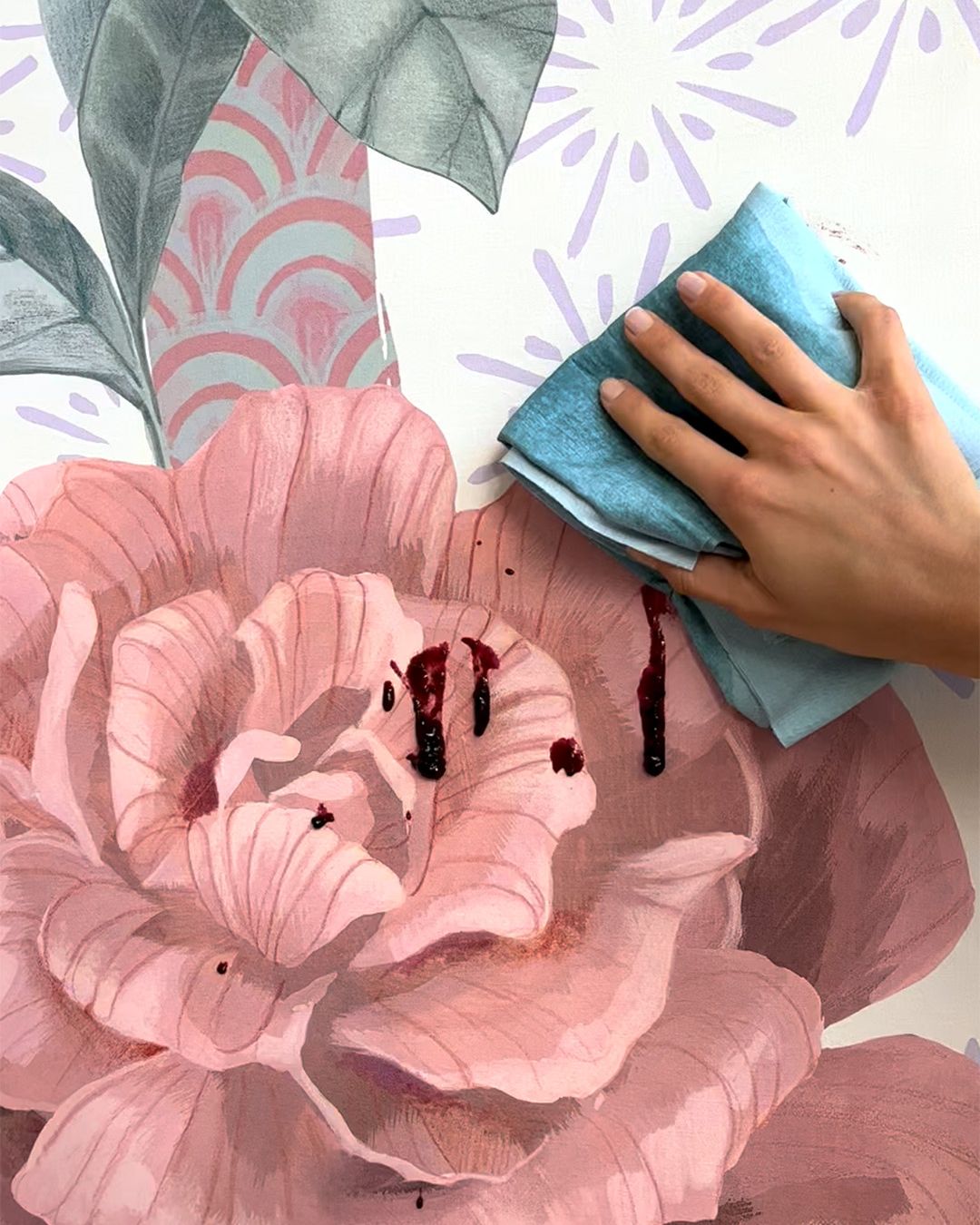
A popular option is designer wallpaper: striking, straightforward to apply and remove, and genuinely elegant — suited to any room in the house.
A DIY decor project? Wallpaper works everywhere, and you can order it online
You can use bedroom wallpaper on just the wall behind the headboard, turning it into an original feature in itself, or use it to highlight a piece you love — a mirror, a chest of drawers, a console table.

Creativity and good taste — plus the work of designers who think carefully about pattern and colour — mean wallpaper doesn't have to stay confined to the intimate, private bedroom. It works just as well anywhere in the house that needs a bit more character.
Weighing up materials? Order samples and see the finishes for yourself before committing to a design.
In the living area, it's common to decorate a single feature wall with a bold pattern and keep the rest in a complementary plain colour. That one wall, along with the furniture in front of it, becomes the focal point and reshapes how the whole room reads. Placing the sofa against a single wallpapered wall makes it the centrepiece of the home. The same logic works in the kitchen: sometimes changing the flooring, or covering the existing one with a laminate, paired with a new wall colour, is enough to completely change how the room feels.
A bolder move — applying designer wallpaper — can transform the everyday spaces of a home entirely, giving rooms that might otherwise go unnoticed a strong sense of character.
Is there a peel-and-stick alternative to wallpaper? Durable, conformable coverings for furniture and walls
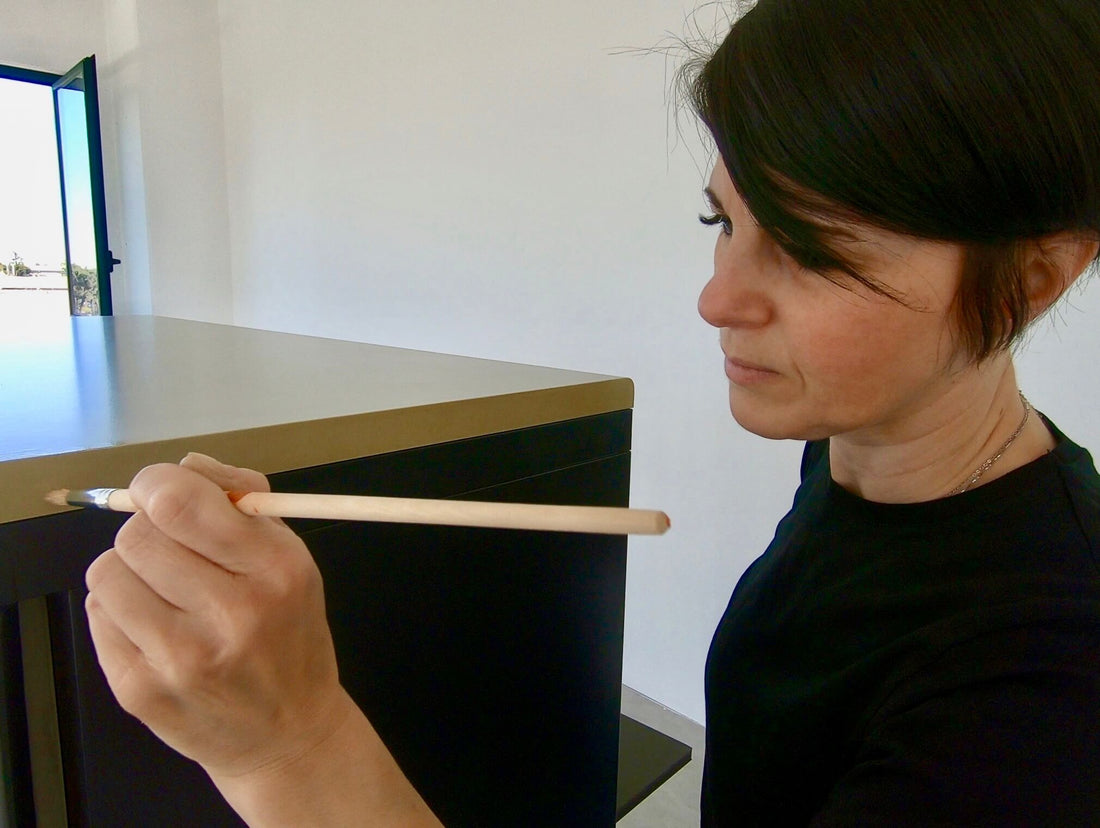
For an original, refined effect, the most innovative alternative to patterned or illustrated wallpaper is a self-adhesive covering that replicates the grain and tone of natural or engineered materials. These are thin, flexible adhesive films — usable on walls or to give old furniture a new look, scratch-resistant, long-lasting, and bubble-free. Want to see how it's done? Watch the tutorial video for transforming an old chest of drawers.
Want to refresh a room without mess or costly building work? See how wallpaper and adhesive films can transform your DIY renovation — no demolition needed. Request a free simulation.
Furniture and layout: giving your renovation its final personality
Your home is nearly ready, and the finished look is starting to take shape. Once you've settled on materials and colours for your coverings, it's time to define the furniture.
The colour match between furniture and walls is what pulls a room together — an interior designer can help here, translating your taste into something functional and cohesive.

Bringing in outside help really pays off when you need bespoke furniture, tailored to your space. If you'd rather keep your existing furniture, adhesive films let you refresh it yourself, faithfully reproducing wood grain and colour, even in a matte finish.
Kitchen cabinet doors, for example, can be resurfaced in colours and patterns that bring a dated kitchen right up to date — the same adhesive films work brilliantly on kids' bedroom furniture, letting beds and wardrobes grow up alongside the kids without a full replacement. You can bring the same creativity to walls with paint, pairing bold colour with a section of made-to-measure wallpaper for a genuinely one-of-a-kind finish.
Don't overlook lighting: there's a whole discipline dedicated to colour temperature, direction, and tone for a reason. Well-planned lighting creates atmosphere no piece of furniture can match on its own.
Renovating your home in Italy: the current tax incentives
The final piece of this guide covers Italy's tax incentives, confirmed under the 2026 Budget Law. Among them, the Renovation Bonus (Bonus Ristrutturazioni) and Ecobonus remain effective ways to reduce the cost of the work described above — including facade and render repairs. As of the 2026 Budget Law, these let you deduct 50% of costs on your primary residence (36% for a second home), up to €96,000 per property, spread over 10 annual instalments.
Eligible work includes structural repairs, safety upgrades, energy efficiency improvements, facade renovation, noise reduction, and even the purchase of household appliances. The deduction applies to your primary residence and its outbuildings (garages, cellars), provided they're used for that purpose once the work is done.
For a second home, the rate is 36% (same €96,000 ceiling), unchanged for both 2025 and 2026. From 2027, rates are set to drop further, to 36% for a primary residence and 30% for a second home, always within the same spending cap.
Frequently asked questions
Can I renovate my home myself in Italy?
Yes — many jobs, especially coverings, painting, and furniture, can be done yourself. Structural work, utilities, and anything requiring a formal permit should go through a qualified technician.
What renovation work doesn't need a permit in Italy?
Routine maintenance is exempt: replacing interior coverings, repainting, straightforward utility replacement, outdoor flooring, and removing architectural barriers. More substantial work needs a SCIA; residual cases need a CILA.
Where should I start a DIY home renovation?
Start with planning: set a realistic budget and target result, confirm which permit (if any) your planned work needs, then move on to demolishing any non-load-bearing walls and reworking utilities before tackling coverings and furniture.
Do I need a permit to change wall coverings or install wallpaper?
No — replacing wall coverings, wallpaper included, counts as routine maintenance and needs no permit in Italy. It's also one of the works eligible for the Renovation Bonus tax deduction.
What tax incentives are available for a DIY renovation in Italy?
The Renovation Bonus, confirmed under the 2026 Budget Law, lets you deduct 50% of costs on a primary residence (36% on a second home), up to €96,000 per property — including DIY work on coverings and finishes, provided you keep the relevant invoices.