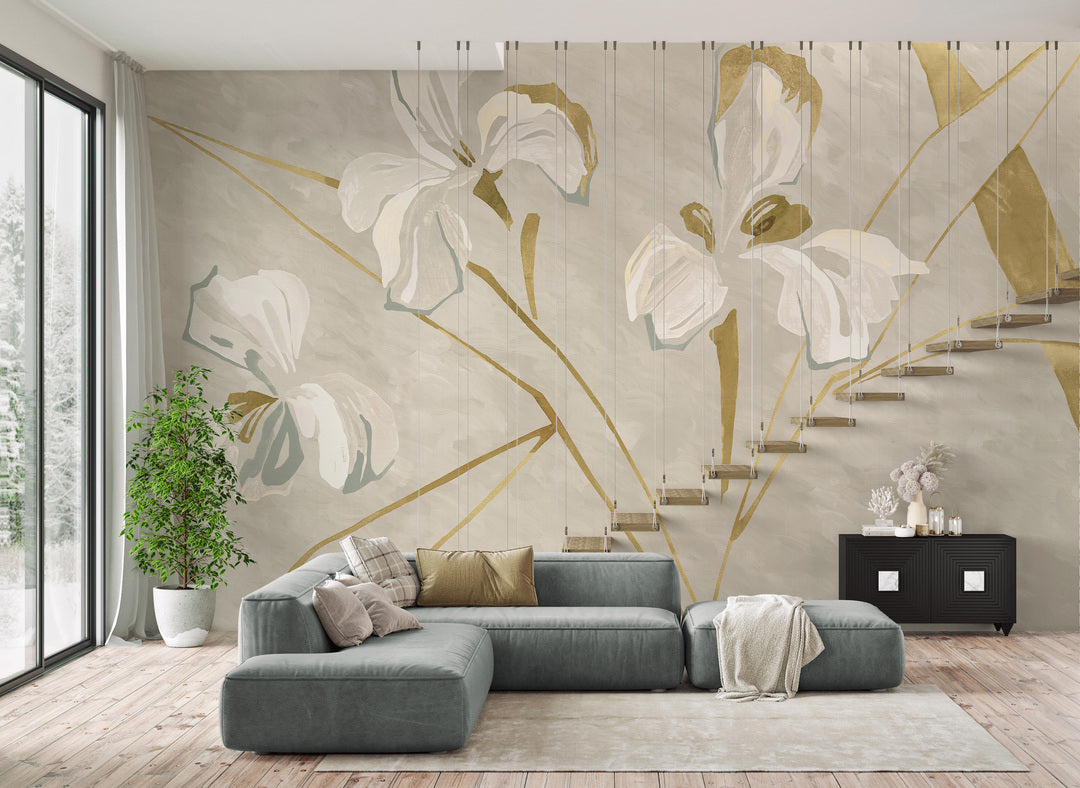

There is a new word circulating among those who track interior design trends for autumn 2026: forestcore. It is not just another passing fad born on Pinterest, but the natural evolution of a path that has been unfolding for several seasons—the one that has taken us from biophilic design to earth tones, and finally to the deep greens that today dominate the palettes of the most photographed homes.
Forestcore takes the best of this journey and elevates it to a more immersive level: dark greens, raw wood, moss, pinecones, bark. The idea is to recreate, within the walls of your home, the feeling of calm and grounding one experiences when stepping into a forest. And if there is one element that can transform any wall into a true woodland vista, it is botanical wallpaper.
What forestcore (really) is and why it's being talked about right now
Several trend reports for autumn 2026—including an analysis published by PG Casa, which identifies forest green as one of the key colors of the season alongside wood, stone, and natural materials—confirm forestcore as one of the strongest styles of the moment, along with more decorative looks like neo-déco and jewel-toned maximalism. The difference is that forestcore does not focus on showiness, but on texture and chromatic depth: forest green walls, raw wood elements, and materials that age well and do not fear daily use.
It is no coincidence that this trend is gaining ground right now. After years of "safe" interiors—grays, whites, and neutral shades that you can never go wrong with—there is an increasingly strong demand for environments that have character, that tell a story, and that provide a physical sense of comfort rather than just an aesthetic one. Forestcore meets this need exactly.

The forestcore palette: which greens to choose
Not all greens work the same way on a forestcore wall. There are three shades currently leading the trend.
Deep forest green
Almost black in low-light conditions—perfect for hallways, stairwells, or walls that do not receive direct sunlight, where it creates an enveloping rather than oppressive effect.
Moss green and sage green
Softer and more versatile, ideal for living rooms and bedrooms where you want a relaxing effect without sacrificing character.
Petroleum green
The most dramatic choice, to be used with moderation on a single accent wall or in transitional areas like an entrance.
A practical tip: if you are not sure which shade to choose, start with the elements you already have in your home—a rug, a sofa, curtains—and let the existing palette guide your choice of the right green, rather than the other way around.

Why (custom-made) wallpaper is the right tool for forestcore
Painting a wall dark green is an option, but it has an obvious limitation: paint provides color, not texture, and forestcore thrives on texture—bark, leaves, intertwined branches, and material effects that evoke the forest floor. Even the most consulted furnishing guides on forest green point to patterned wallpaper as one of the best applications for an accent wall, alongside solid paint.
This is where botanical wallpaper comes into play, but with an important caveat: to truly work, the design must cover the wall without visible gaps. A botanical pattern with misaligned seams or a roll cut "by eye" for a non-standard wall completely ruins the immersive effect you are trying to create—and stairwells, mezzanines, niches, or walls with custom heights are exactly the places where forestcore performs best.
This is where custom-made wallpaper makes a real difference compared to standard rolls: the design is calculated and printed to the exact dimensions of your wall, ensuring continuity of the pattern from start to finish, with no wasted material and no risk of a visible seam in the middle of a trunk.
Still not sure how a forestcore wall would look in your home? Request a free, no-obligation graphic simulation.
How to apply forestcore room by room
Entrance and hallway
These are the ideal spaces to dare with an intense forest green: as they are transitional environments, they can better handle a dramatic shade that might feel excessive in a bedroom.

Living room
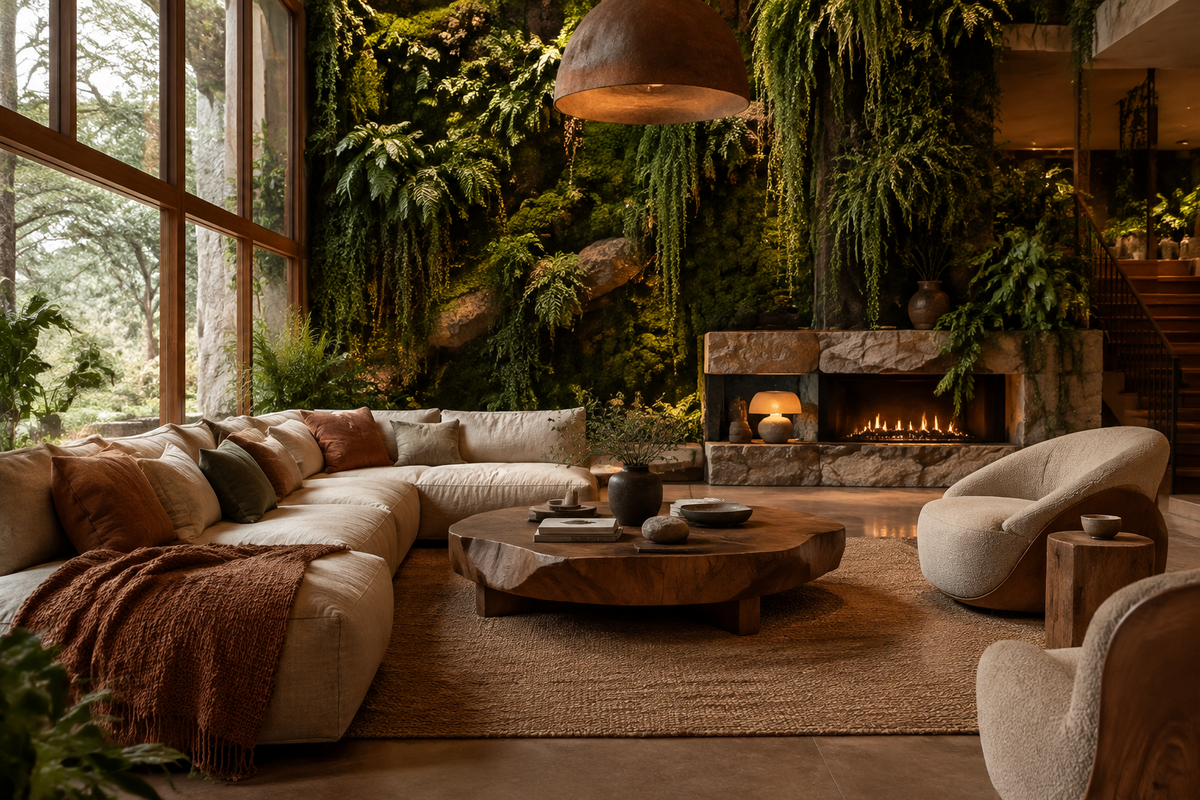
Here, a single accent wall works best—typically the one behind the sofa or the fireplace—leaving the others in a warm neutral (cream, taupe, beige) that lets the botanical wall breathe. This is the application shown in the opening image of the article.
Bedroom
Moss or sage green on the headboard wall creates a relaxing, almost refuge-like effect, particularly effective when combined with natural fabrics like linen and raw cotton.

Home office or study
An environment often underestimated for decor trends, but perfect for forestcore: various insights into biophilic design applied to workspaces link the presence of greenery and natural elements to increased concentration and lower stress levels—one more reason to bring some forest into the room where you work. Here, instead of an illustrated pattern, we chose photographic wallpaper: the same idea of immersion in greenery, with an effect even more similar to a real window overlooking the woods.

Mistakes to avoid
The first mistake is to use forestcore everywhere: it is a trend that calls for restraint, not a total takeover. A strong wall in a neutral room works better than four botanical walls that end up straining the eyes.
The second mistake is to choose generic wallpaper, thinking that "it's all just a forest, the design will align anyway": the most realistic botanical patterns (branches, leaves, bark) are exactly where misalignment is most noticeable, because the eye immediately recognizes a branch broken in half.
The third, more practical one, is not measuring carefully before ordering: walls with niches, electrical outlets, non-90-degree corners, or non-standard heights must be handled with a custom project from the start, not "adjusted" later.
The forest can wait—but not for too long
Forestcore is not a trend that will disappear with the next season: it is part of a broader movement toward warmer, more tactile homes that are more connected to nature, which is unlikely to fade within a year. If you like the idea but don't know where to start, the easiest way is to start with a single wall—the one you look at most during the day—and let the rest of the house follow.